Compare your arm to your leg sometime. Not metaphorically — actually look at them. One of those limbs is built to carry your whole body around all day. The other one isn't. That difference is the whole reason so many students get hurt holding kicking targets, and it's the reason I harp on this in every single class.
When you hold a target out at arm's length, straight-armed, you're asking your wrists and elbows to absorb a force generated by someone's hip, quad, and hamstring. A solid roundhouse kick will blow through extended arms almost every time, because there's simply more force coming in than your arm structure was built to stop at that distance. This isn't about toughness. It's leverage and mass, plain and simple.
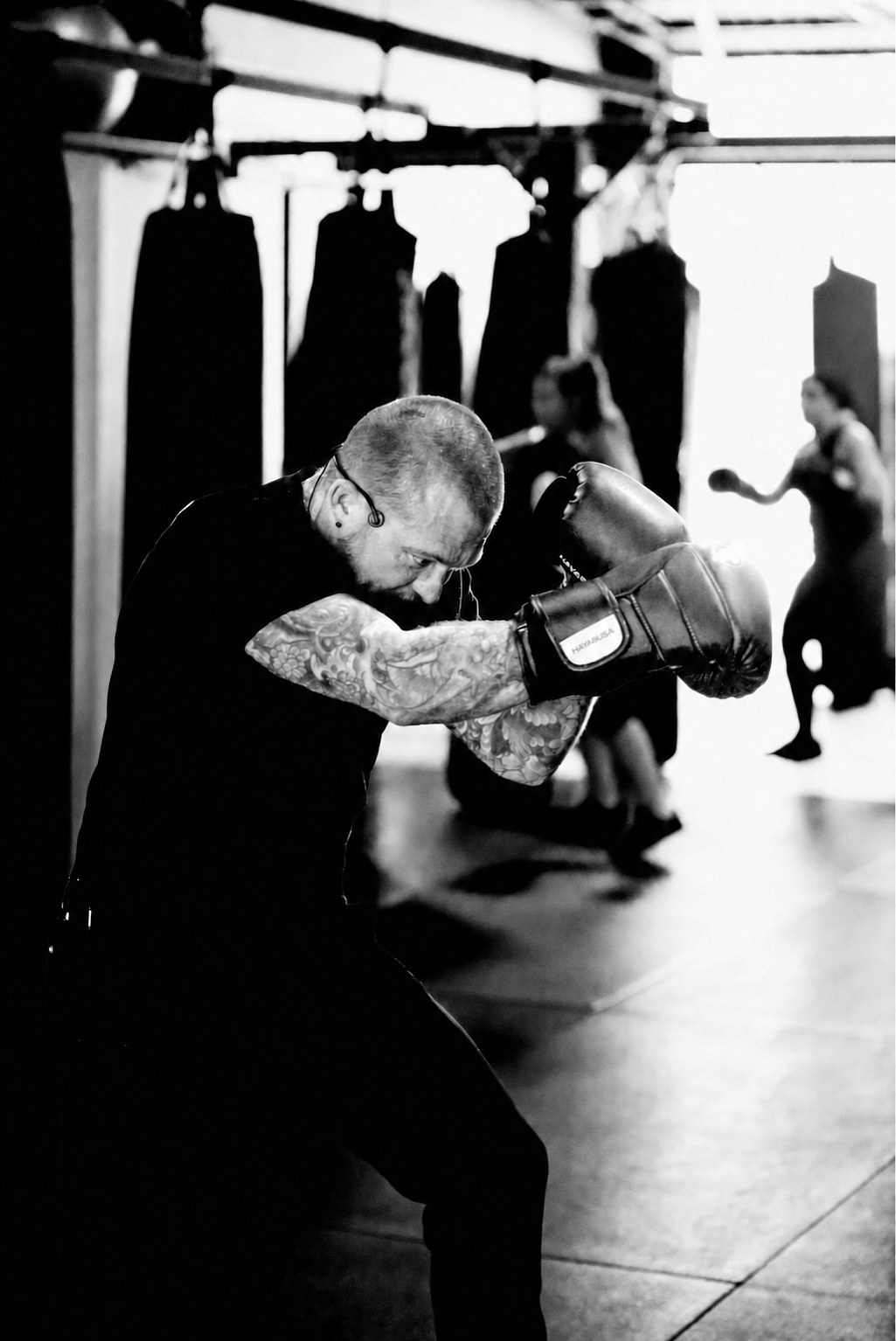
Pull the target in close to your body. Get your shoulder behind it. Bend your knees. Let your whole structure — legs, hips, core, shoulder — share the load instead of parking it all in your hands. That's framing. That's bracing. You're getting ready for the hit before it lands, not hoping it doesn't come.
Done right, your shoulder takes the first shock. Your bent knees work like shock absorbers. Your core keeps everything connected instead of letting the force isolate in one joint. The energy spreads out across a structure that can actually handle it, instead of concentrating in the weakest links you own — your wrists.
Holding a target like a stop sign is betting your wrists against someone's legs. That's not a fair fight, and physics doesn't care how confident you feel walking into it.
This isn't just a target-holding lesson. Anytime you need to absorb force in a real situation — a shove, a fall, someone crashing into you — the instinct is to throw your hands out and brace straight-armed. That instinct is exactly what gets people's wrists broken. Frame instead. Pull your elbows in tight to your body. Let your shoulder take the lead. Bend your knees so your legs can help.
I think about it like a house in a storm. The house that survives high wind isn't the one that fights the wind head-on and refuses to give an inch — it's the one built to flex, absorb, and redirect force through its whole frame. Rigid structures snap. Structures built to move a little under pressure hold up.
That's the standard I want my students carrying with them: be the structure that absorbs and survives, not the one that stands stiff and breaks. Frame first. Brace second. Absorb the hit. Then respond on your terms, not on someone else's.
If you want to drill this properly — framing, bracing, and the footwork that goes with it — that's exactly what we work through in our self-defense sessions. Come see it in person; it clicks a lot faster when you feel the difference in your own shoulder.