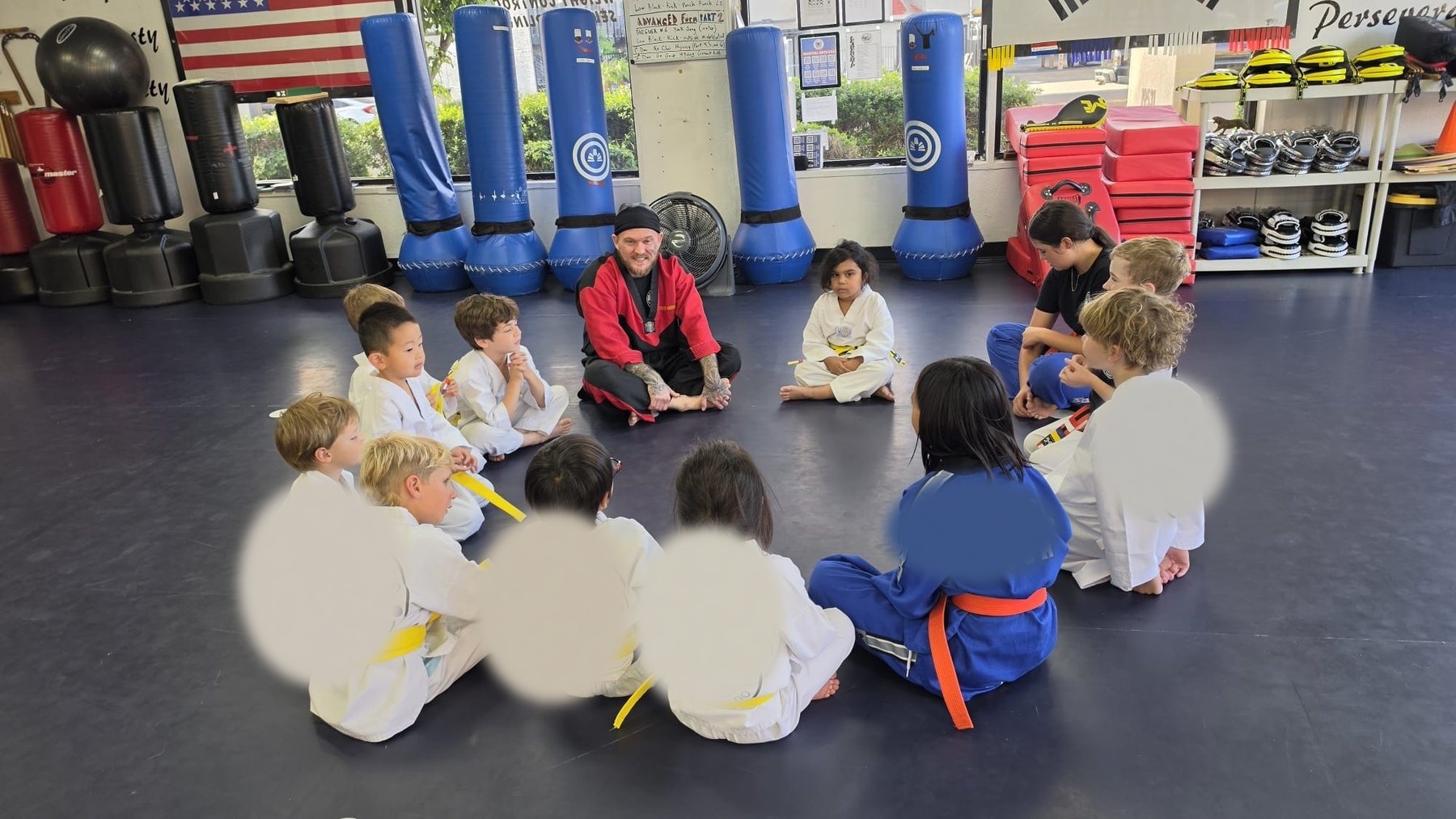
At the end of every class, I say two words: "Quickly and quietly." If you train with me, you know exactly what they mean — clean up the equipment, put the targets away, stack the mats. Fast. No talking.
Watch from the sideline and you'd think it's about noise control. It isn't. "Quickly and quietly" is a leadership drill wearing a cleanup costume.
No wasted motion — you see the job, take your piece of it, and move. No wasted words — you read the room and see what needs doing next instead of waiting to be told. No chatter, no joking around, just the work in front of you. And under all of that, the real lesson: act like the moment requires. Loud has its place. This isn't it.
Lo and behold — a miracle. The older students stop needing to be told. Then they start showing the younger ones. Then the younger ones just do it. Eventually I say "clean up" and the whole room moves — no yelling, no repeating myself, no chasing anyone around the mat.
That's not a speech about leadership. That's leadership running on its own. And it doesn't stay on the mat. It follows them into the classroom, into their jobs, into everything they do after.
If you run a school and cleanup takes more than sixty seconds, the problem isn't the mess. It's the leadership. Drill it like anything else — reps, not lectures. When they nail it, say so. Let the older students run it instead of doing it yourself every time.
Give it a month, and those sixty seconds will tell you more about your school than anything else in the class. Not because the mats got stacked fast — because of what it took to stack them that fast.
We build this into every class — structure on the mat that holds up off it. Don't take my word for it. Come watch a cleanup.